Recent Links

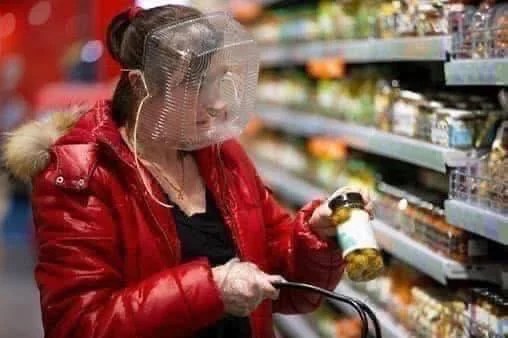
Woman shopping for olives while wearing a plastic deli container over her face.

Remember that brief period in 2020 when we knew enough germ theory to realize that Covid was airborne and we needed face coverings, but not enough to realize that germs were extremely small so we needed surgical-level face coverings? This Reddit thread compiles some of the improvised masks that people used for grocery shopping in those days.

’Occupation: Organizer’: How Anti-Politics Becomes Anti-Democracy, by Emma Tai in Convergence. A warning against ACORN-like political structures that don’t allow democracy to flourish within the organizaiton.

Lowell’s Forgotten House Mothers, by Sarah Buchmeier – A review of what we know about the boarding house keepers who were vital to the functioning of the Massachusetts company towns in the 1800s. We don’t know much!

What I’ve been reading

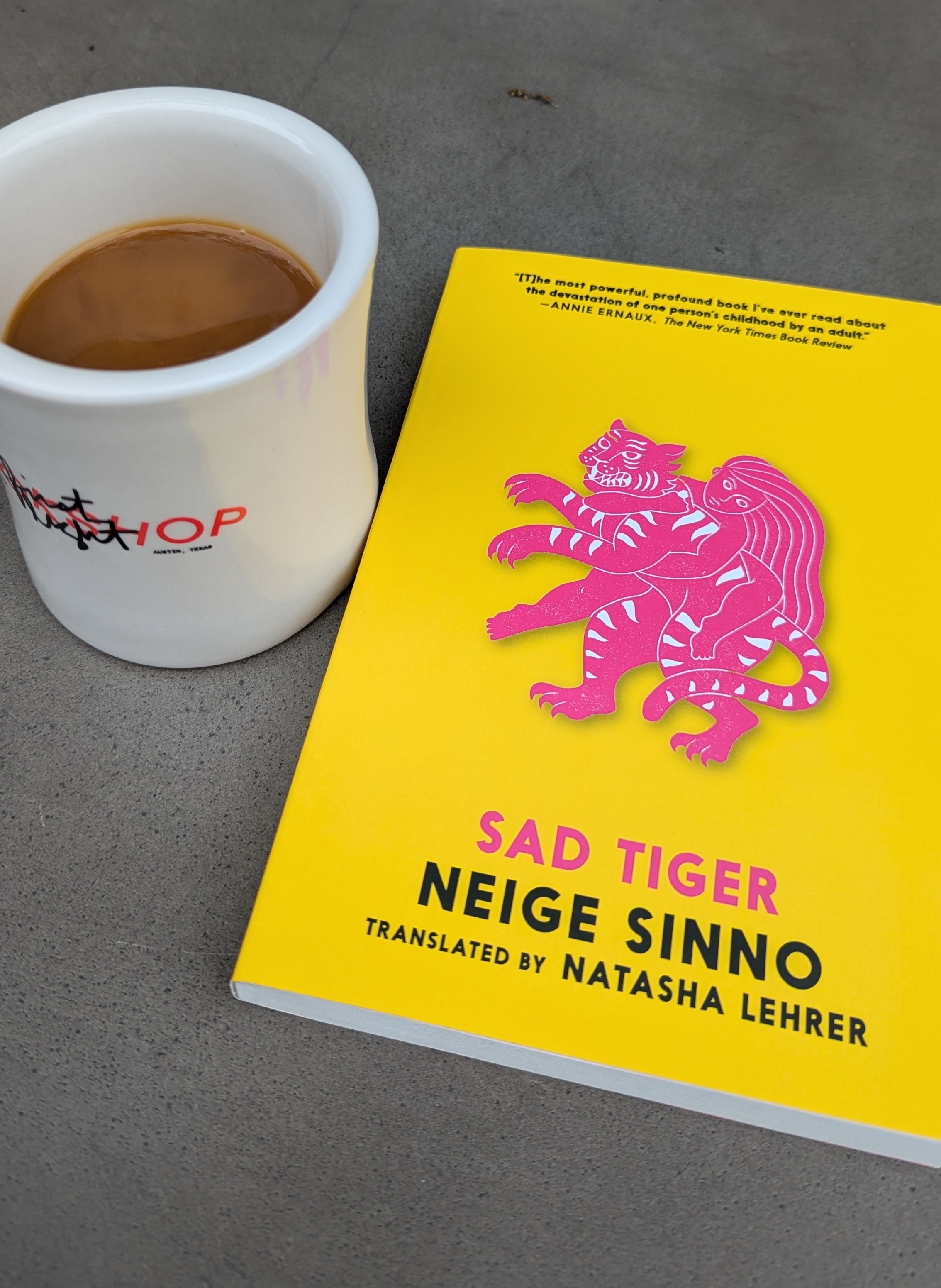
The book Sad Tiger and a cup of coffee

(Despite the photo, I have NOT been reading Sad Tiger. I picked up my pre-order and saw it described as “devastating” and was not ready for it.)

First Love by Ivan Turgenev, translated by Isaiah Berlin

The Mookse and Gripes podcast has started a novella book club, and this is the first selection. It’s an experiment in using Discord to collect former book twitter folks into a reading group. It’s also an experiment, for me, in slowly reading a novella. This could be read in one sitting but instead it’s being spread out over a week. I read the first third and had to pause myself from reading further.

Notebooks by Tom Cox

I haven’t had time lately because my mornings are now used for exercise, but I used to have a “morning book” that I read a little bit of every day before writing in my journal. It was usually diaries or something similar, and I would spend a bit time examining how other people process their lives before processing mine. Notebooks sort of fits that theme. It’s excerpts from Cox’s notebooks, so it’s real like a diary but the excerpts are more like tweets. They are short quips, with an occasional longer bit that might take up a whole two paragraphs. It’s hard to read in long chunks for the same reason it would be hard to sit down and read someone’s twitter feed all the way through. Each individual bit, however, is a delight with hilarious stories about mischievous Devon hedgehogs and the antics of his dad WHO TALKS LIKE THIS.

Strike! by Jeremy Brecher

Ok, I haven’t really started this one yet. My local DSA chapter is about to start reading this history of American strikes alongside The Troublemaker’s Handbook. I am a little less enthusiastic now that Shawn Fain is out there making the labor movement look bad, but I do want to be more educated about the subject for the next time I get into an argument about “why don’t Americans call a general strike?” I might not actually manage to read my assigned bits before we meet, but the DSA bookclubs are the sort where the discussion the books prompt about current conditions is the vital part.

Butter by Asako Yuzuki, translated by Polly Barton

This is the book that I’m actually reading in the sense that I carry it around with me everywhere and dip in as time allows. I picked it up on a whim at the bookstore when I saw Barton’s name and the cover blurb. Rika is a young female journalist at a publication that has never had a woman writer. She works long hours to become the first, neglecting her own love life and comforts, eating only 7/11 onigiri and grab-and-go salads. In an attempt to get an exclusive interview with a former food blogger, Kajii, accused of murdering men she met on dating apps, Rika starts to follow Kajii’s orders about what to eat and cook. From prison, Kajii gives Rika assignments such as to bake a quatre-quarts and serve it to a man while it is still hot from the oven. Rika begins to embrace the sensuality of food in a way she hadn’t before, but also gains weight, forcing her to confront the extreme fatphobia and misogyny of Japan. The ways the case transforms her life aren’t straightforward, and about two-thirds of the way through, this novel takes a different direction which pleasantly surprised me after I had been lulled into a routine of jailhouse interviews and baking. I still have at least a hundred pages to go, but I feel like I am in good hands with Yuzuki and Barton.
5 Things Regular Drivers Might Not Know About Cyclists

  1. At stop lights, we flirt with our fellow cyclists. We compliment each other’s bikes. Or sometimes we just say “hello” or let them know their shirt is on backwards. Personally, I engage in many passive aggressive undeclared races with cyclists who are rude. The point is that we are sometimes interacting directly with other cyclists, as part of a community. We are not isolated from one another, or from the consequences of our behavior. (But seriously, more people flirt with me when I am on my bike than at any other time in my day.)
  2. We can feel the paint on the road. We are sensitive to road conditions like debris that a driver wouldn’t even be conscious of. If you wonder why a cyclist is in the car lane instead of what appears to be a perfectly good bike lane, it’s likely because there are dangers in the bike lane that aren’t apparent to drivers. For instance, a pile of leaves can conceal dangerous glass or holes, so it’s best to avoid them altogether.
  3. We see a lot of broken glass and car parts at intersections. We see curbs that have been destroyed by vehicles that don’t stay in their lanes. We see more of the effects and frequency of poor driving than drivers do.
  4. We are not expected to follow the law (by traffic engineers). A cyclist has trouble following traffic law 100% of the time because, for cyclists, those laws are poorly-defined and in flux. For instance, on my morning commute there is a light that triggers when cars pull up to it. It doesn’t trigger for my bike. I have to run the red light if no car shows up to save me. Engineers have considered this when installing the light and decided it was ok. There are areas of town where according to the city, cyclists are not allowed to ride on the sidewalk. Some parts of this area also have road paint indicating that cyclists should ride on the sidewalk for a block and then abruptly hop back onto the bike lane. Sometimes the bike lane suddenly switches to being on the left side of the road, and I have to merge across three lanes and ride on the left before having to merge back right and ride on the right. Sometimes safety takes priority over either indicators or laws. It’s safer for pedestrians and cyclists to cross a street slightly before the light turns green for drivers. Many intersections will flash the walk sign for pedestrians a few seconds before the light turns green. As a cyclist, do I wait for the light to turn green or do I cross with pedestrians? Do I follow written laws, or do I follow the road indicators installed by traffic engineers? Or in cases when neither is safe, do illegal but safer for everyone near? Cyclists constantly have to make their own decisions about when to follow the law.
  5. There are more of us than you know because we’re deliberately riding on roads where you won’t encounter us. When I first started commuting to my current office, I took the direct route. Not necessarily the one a driver would take, but still using whichever major roads had bike lanes. Over time, through experimentation and talking to other cyclists, I landed on a route that zig zags through residential neighborhoods and parking lots, selecting for quiet and well-paved paths. I see many other cyclists on this circuitous route; apparently they have discovered the same paths I did and made the same choices. The only drivers who see us on this route are homeowners along the path. Other drivers would not be aware of how many workers are commuting by bike every day because we’re deliberately hidden.