From Antarctica with Love – We know the story of Scott’s ill-fated trip to the South Pole, but what about the men who managed the base camp and Terra Nova, the men who had to find the party after it disappeared? This long essay describes their love for each other and the traumas of their less obvious role in the expedition.
The Tyranny of Public Opinion – Peter Shamshiri – evidence that voters change their views on issues based on political campaigns.
Vitamin Q – Stephen Skolnick – The case for neurotransmitter deficiencies responsible for issues like depression being linked to the guy biome. Contains interesting tidbits like, “Tryptophan, in addition to being the most complex of the protein-coding amino acids, is also the rarest in nature. This is why serotonin is intimately tied to satiety and sleep: if you have enough tryptophan in your belly, it tells your body that you’ve almost definitely got enough of everything else.” Head’s up though that at the end there’s a plug for investments in his experimental vitamins.
Trapped in the Mine – Helen Sullivan. A devastating account of miners trapped in an illegal gold mine in South Africa.
My Favorite Etymologies: To Curry Favour – weird medieval guys – Exploring the etymology of the phrase ‘currying favour,’ Olivia introduces us to the most evil horse in history.
I have been trying to swap social media for blogs, probably due to nostalgia rather than good sense. There are a few sites now to make it easier to find small blogs, tools that act like modern-day webrings. For instance, there’s Kagi Small Web, where you can flip through recent blog posts and the similar indieblog.page. Marginalia, Feedle, Indieseek and Search My Site are search engines that prioritizes small sites which also have browsing options. Then there’s Ooh! Directory, modeled after the old Yahoo directory where you could browse sites by category. Then there are blogrolls, like Blogroll (lol). There is unfortunately (for me) a bias towards programming blogs on the small web, but there doesn’t have to be. It’s still entirely possible to create your own free blog on Tumblr, Bloggr, or Neocities.
For the past few years, my touchpoint when describing the small web to friends has been Clive Thompson’s concept of “rewilding.” He originally borrowed the idea from someone else, but it’s Thompson’s series of blog posts with suggestions on using sites like Marginalia to rewild your Internet browsing that have stuck with me through the years. The idea is that you break out from the algorithm and allow yourself chances to be surprised rather than marketed to. The recent changes to Meta’s policies and algorithms has me meditating on the concept once more. One of my sources for web wildness for the last few years has actually been Facebook groups. I keep getting suggestions to join groups about moss or clay pots or “pretending that we are boomer birders.” On Facebook, I was able to browse through many niche hobbyist forums, and the more I looked at, the more eccentric the next one the algorithm suggested was. I was successfully using the algorithm to rewild my browsing. Now I am trying to stay off of traditional social media but looking for that same experience.
There’s a tension between findability and avoiding the algorithm. Does a book blog like this really need to be “findable” though? Not really. I am going to add this blog to some of the webrings I mentioned so that people can stumble upon it (do you remember that website?) I hope it strikes people as a wildflower on the web, and not a weed.
In 2022, I volunteered with a campaign to unseat my district’s representative on the Travis County Commissioners Court. Brigid Shea had been serving mostly satisfactorily for ten years, but there were some issues that she pushed that greatly disturbed me, notably an attempt to open a new jail and giving tax breaks for Tesla to build a factory in Austin. We went door to door with flyers, telling our neighbors why Bob, our candidate, was a better choice than Shea. We told them how Shea voted to let Tesla move here, but at the time, it wasn’t a convincing argument. “Why is it bad that Tesla is moving here? They make electric cars.” They are a terrible company, we explained, and Musk was a terrible man who, once he had economic and political leverage in our community, would ruin it. “But doesn’t it create jobs?” Yes, but they are bad jobs; Tesla has a history of treating workers poorly. We ultimately didn’t convince voters that these things mattered enough to overcome the incumbent advantage, and she still represents me.
I maintain a grudge against Shea about Tesla, but I am sure that she now regrets her vote as well since she’s staunchly anti-Trump. I am not sure that she regretted it before 2025, when Musk was funding conservative political campaigns in Austin that would benefit wealthy homeowners, even if they were Democrats. While I can hold a grudge against the politicians who should have done deeper research before voting, I don’t hold a grudge against the voters. Talking to them, we learned that what was obvious to us, that Musk and Tesla would actively make Austin worse, was not obvious to the public. It’s not limited to Austin; Etsy sellers are making good money selling bumper stickers for Teslas to help the owners demonstrate that they did not know where their money was going. It’s led me to wonder: how did we know? How was it that those of us in DSA supporting Bob’s campaign were so sure but our neighbors weren’t?
I have been a Musk hater for as long as I can remember knowing about his existence, but I don’t know what triggered it. I remember reading Seveneves, a popular science fiction novel published in 2016 that features a Musk stand-in as a hero who sacrifices himself for humanity, and thinking it was the dumbest thing I ever read. Why was I so sure? I want to know not so I can say, “I told you so,” but because I want to know what it would take to make villainy more obvious; I want to know how to prevent the next Musk.
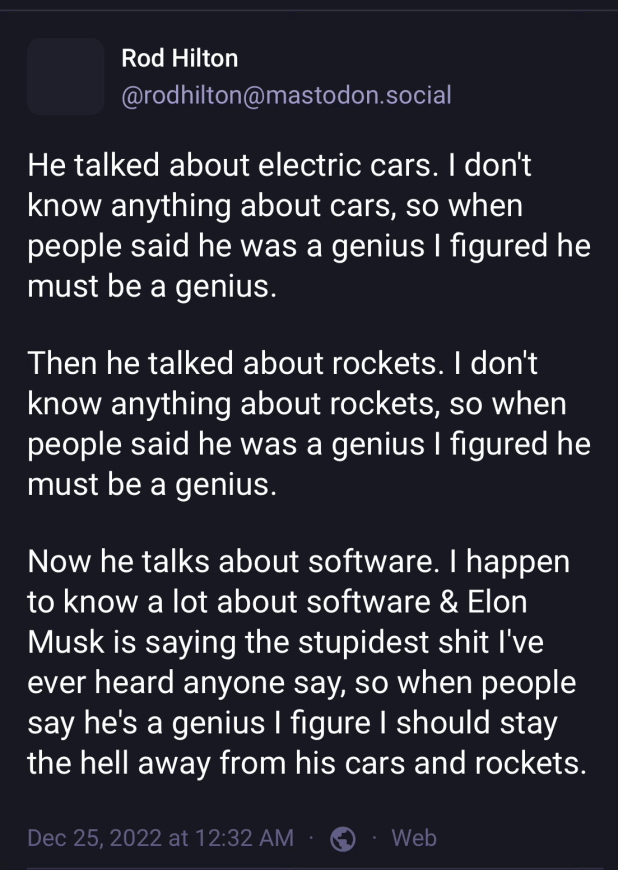
I know that I pay attention to more news than the average person. I certainly follow more labor news, so I would have noticed and paid attention to the Tesla and SpaceX workplace safety and harassment stories. I paid attention to the destruction of Boca Chica because it was here in Texas. I also read tech news, but I don’t think that helped here because the tech reporters were so credulous. As a software engineer, though, I had the domain knowledge to know that Musk knew nothing about the domain himself. Similarly, as a socialist, I brought a class analysis to the news about Tesla and Musk that I’ve read throughout the decade. When I see Musk make an off hand remark about union busting, I instantly know that he was not some kind of “visionary” but that he’s relied on poor treatment of labor for profit like every other capitalist. The mere fact that he’s a billionaire is enough to earn my distrust, because billionaires shouldn’t exist. (Sorry, Rihanna.)
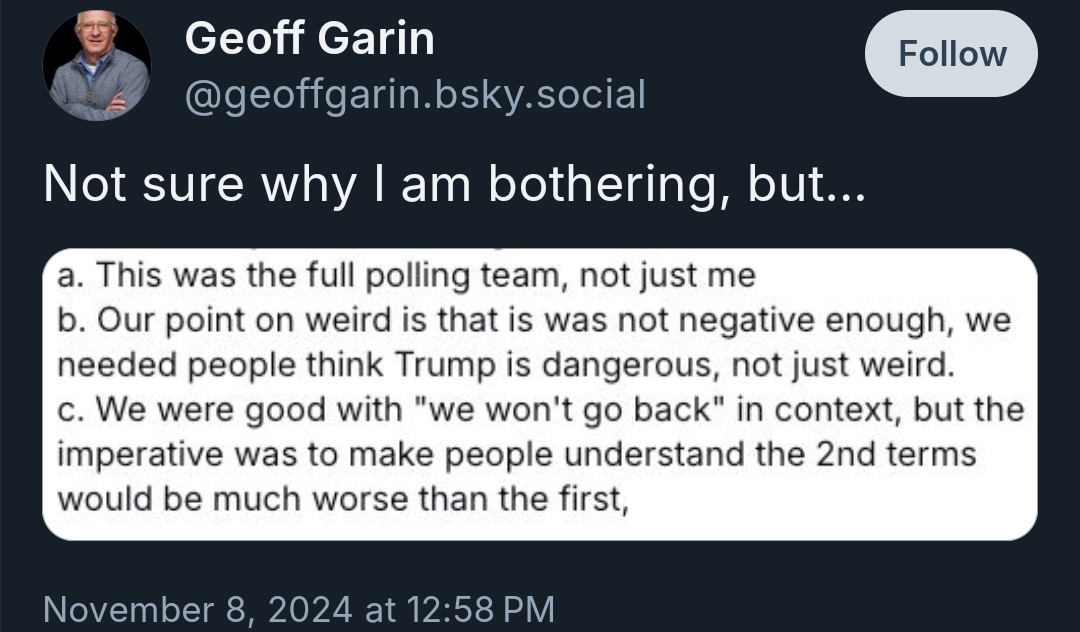
Closer attention to tech, labor, and environmental news may explain a greater awareness, but I have trouble proving this satisfactorily. Our information ecosystem has degraded so it’s difficult to find what articles I would have read years ago that made me skeptical. I have personally published an article online about Musk, but when I tried to find it today to see what year I wrote it, I can’t. It’s gone. Worse, it’s likely that many of my sources were not articles at all but tweets. As a fan of Grimes’ music, I followed her on Twitter and I remember watching in real time as she responded to allegations about union busting in Tesla factories. She later deleted the tweets. In this case, I was able to find a recap because some journalist thought it worthy of capturing at the time. A more recent example of the danger of politics being made on social media is the exposure of Geoff Garin. A single sentence in an article about Harris’ campaign alerted the public to the fact that 72-years-old Democratic operative Garin suggested to Harris and Walz that they stop the “weird” messaging that was seemingly so successful during Brat Summer. Garin joined BlueSky right then, and hecklers tried to run him off. In the course of trying to defend his choices, he inadvertently revealed more about the cluelessness of the Democratic establishment. I recently tried to track down this exchange again and, not being able to remember Garin’s name, I was only able to do it because I am personally friends with the prime heckler. I took screenshots in case anyone deletes their accounts or BlueSky is censored by our fascist state.
Is this how we are supposed to keep receipts? Hoping that individuals take screenshots of every skeet they see? How do we build the case that these powerful men are ongoing menaces? In Austin, the next time Kind bar CEO Daniel Lubetzky signals his support for a political candidate, how do I get voters to know that’s a red flag for that candidate because Lubetzky is as politically vile as Musk but more insidious? How do we do it when journalists are unpaid, stories are censored, enshittification has ruined search, and no one uses text-based media? My experience suggests that one route is to build class consciousness so that the average person is less swayed by cars being shot into space, but we’ve been attempting that since 1848. That doesn’t mean that I am going to stop trying, but damn, it’s hard.
I have been reading Lies and Sorcery by Elsa Morante (translated by Jenny McPhee) as part of the #NYRBWomen25 readalong hosted by Kim McNeill. This is the second year that Kim has organized a reading group specifically for women writers published by NYRB Classics. Last year, I read a few of the same books at roughly the same time, but I wouldn’t say I participated. Now I am actively trying to join discussions on Bluesky. Some people are posting about it on Instagram as well, and Paul and Trevor from the Mookse and the Gripes podcast have been discussing the books briefly on air.
Lies and Sorcery is the longest book in the lineup this year at 800 pages. Kim provides recommended dates to read each chapter, which causes me to slow down and spread the book out of a longer period of time than I would if I were simply reading until I fell asleep each night. The pacing combined with online “watercooler talk” makes it feel more like watching a prestige tv show than reading a book. I have to wait until the next week to see how these characters who hate each other will (as revealed at the start) marry, or to find out what happens to the cheerful but destitute prostitute. The novel is melodramatic so it lends itself especially well to this type of serialization. The last time that I had this experience was when I participated in a different NYRB classics reading group and read The Balkan Trilogy by Olivia Manning. That book was less sensationalist, but it was long and epic in scope, and I watched it unfold slowly alongside other book twitterists.
The most obvious comparison for Lies and Sorcery is the Neapolitan trilogy; even the authors Elsa Morante and Elena Ferrante rhyme. (Of course, given that Ferrante is an alias, the name Elena Ferrante may have been chosen to recall the former queen of Italian literature.) Both works are about the constraints of poverty, particularly as they affect women, both focus in on the relationships within an Italian neighborhood, and both are extremely melodramatic. Whereas I count My Brilliant Friend as one of my favorite novels, I initially found Lies and Sorcery a slog. Every character is miserable and hateful. Ferrante does a better job of placing this misery within an intellectual context, drawing on Marx and Cixous. Lies and Sorcery, on the other hand, is cynical. No one has true political convictions; communism and elitism are both merely clothes that characters put on as needed to try to advance their selfish goals. No character has as much self respect as Elena or Lila; Nino Sarratore is not remotely as despicable as Lies’s Eduardo. After a few hundred pages, I at least came to respect Morante’s work, and I had invested myself enough to care what happened next. In the very first chapters, the narrator, Elisa, describes all of the major plot outcomes of the novel, and so I am not reading to find out what happens but to see how emotionally these characters can degrade themselves to that point. I am glad that I am reading it as part of this group because the discussion pulled me over my initial resistance and is helping me appreciate the melodrama rather than resist it.
My method for choosing a movie to watch is to pick from the Criterion Channel’s list of expiring films for the month. Some months, like this January, there weren’t that many on the list that I was interested in watching. When that happens, I look for suggestions in the subreddit Criterion Conversation. They have compiled posts for new collections and for expiring films where users give suggestions for little known gems to watch. They also have a film club where they vote on expiring or thematic films to watch.
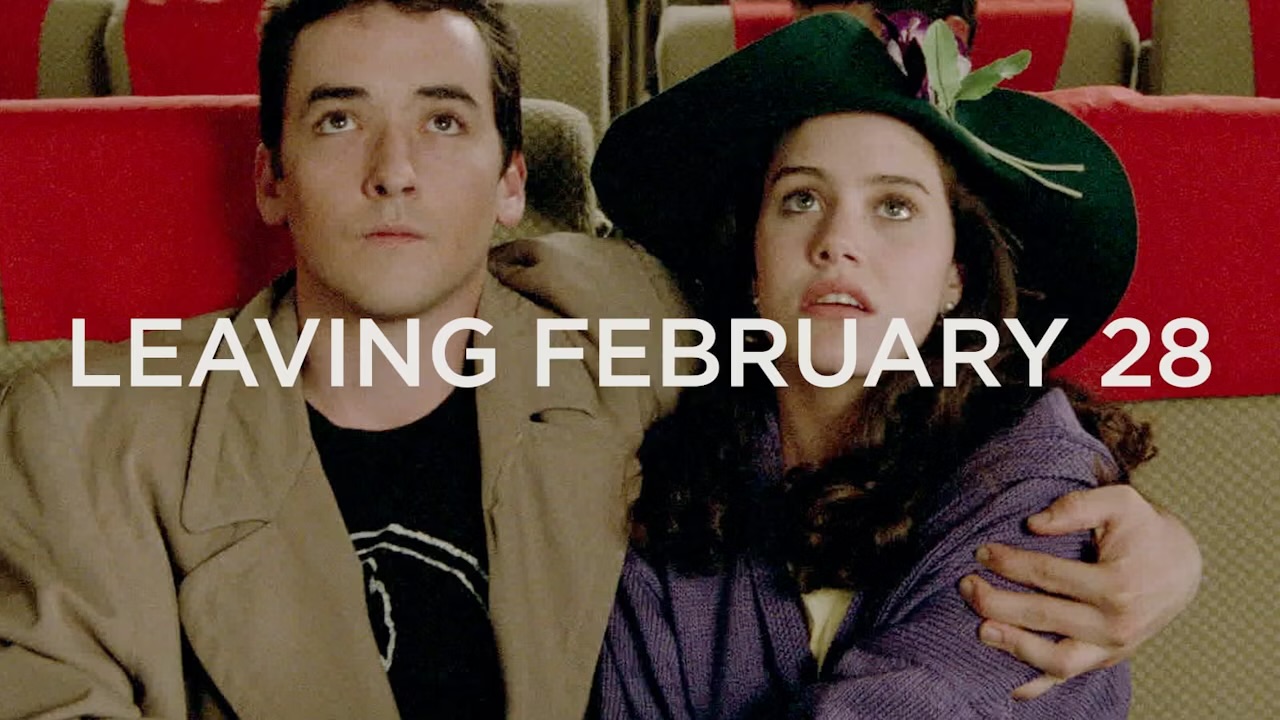
This month, there are many great films leaving the service. Three Cameron Crowe movies, Body Double, The Lady Eve, Momento, and many Hitchcocks and John Waters. If you want a less obvious recommendation, Blood and Black Lace seems highly recommended. I personally recommend Hitchcock’s Rope which is unusual for several reasons, including being a pseudo single-shot film.
Any other suggestions for what I should watch from the list?
After over a decade using Metafilter, I think I am going to have to take a step back. I’m not closing my account, but I am going to try and avoid the site for a while. Every time I visit, I am incensed to find someone whose moral center I trust posting disappointing BlueAnon conspiracies.
BlueAnon refers to conspiracy theories posted by and for U.S. Democrats. These conspiracy theories are usually not as extreme as their QAnon counterpart’s claims of child sexual abuse. Instead they are usually focused on electoral concerns.
Common BlueAnon theories:
2024 election was fraudulent due to vote tampering by Musk or Russia (election tampering is a common QANON claim as well).
No one would care about a genocide if it weren’t for Russian propaganda.
Biden really wanted to end the genocide but for reasons could never voice that opinion and had to continually send more weapons to Israel.
There are things conspiring to keep Dems in office from proposing any good policy. This is a general complaint, but there were elaborate explanations specific to student loan debt that were disproven the two times that Biden did indeed cancel student debt.
Harris would have won except the country would never elect a Black president, or the country would never elect a woman president. Or some other reason related specifically to Russia or the American left.
The goal of these particular conspiracy theories is to create a version of the world in which external forces are preventing elected Democrats from taking any positive action. Dem politicians are doomed from the start because of vast conspiracies against them. Some theories have such similarity to QAnon conspiracies that they don’t pass even a sniff test, while others could be plausibly argued if you left out any data that conflicted with it. For instance, claiming that Harris wasn’t elected because “the left” won’t vote for a Black woman ignores the women of color that leftists supported when centrists Dems wouldn’t, such as Rashida Tlaib, Cori Bush, India Walton, and Jessica Cisneros. It also ignores the fact that there was a time when it seemed very much like she would do better in the election. During Brat summer, donors and volunteers were lining up despite the genocide to contribute to the success of Harris and Walz. I personally know people who were protesting the genocide during the day and phonebanking for Dem candidates at night. By the time the Walz/Vance debate rolled around, the Democrats’ messaging changed and their new approach led to diminished excitement. An analysis of Harris’ loss that ignores that shift isn’t aiming for truth. We have evidence that the campaign vibes shift came from tenured Democratic party operatives, and that the party still ignores messaging suggestions from Walz and others. BlueAnon theories ignore this and any other campaign decisions because the entire goal of BlueAnon is to absolve the Democratic party of any responsibility.
Instead of the politicians themselves being responsible, blame is shifted to nefarious others. In fact, the nefarious others are often the same forces that Americans have been blaming for over a century: Russia and the left. The symmetry between these conspiracy theories and previous theories should serve as a red flag, but instead it only makes the theories “feel” correct. Those of us who are middle-aged and older were raised on the threat of Russia as an all powerful enemy whose shadowy ways could be the cause of any negative forces in the U.S. This mental path is so well-worn that it’s comforting for us to retread it.
“American politics has often been an arena for angry minds. In recent years we have seen angry minds at work mainly among extreme right-wingers, who have now demonstrated in the Goldwater movement how much political leverage can be got out of the animosities and passions of a small minority. But behind this I believe there is a style of mind that is far from new and that is not necessarily right-wing.”
Sound familiar? The author, historian Richard Hofstadter looks back to political paranoia regarding the Masons in the 1700s and many other examples of conspiracies in the two centuries between. He says that modern (in this case, 1964) paranoia stems from a different source, though, a feeling of being dispossessed within national politics. “America has been largely taken away from them and their [rightwing] kind, though they are determined to try to repossess it and to prevent the final destructive act of subversion.” One of the primary dangers of this thought mode is that the logical political goal, if you believe your life is controlled by an all powerful enemy, is the obliteration of that enemy. When the “enemy” is half of the U.S. or your potential political allies on the left, the tendency is to damage coalitions and retreat from mass action.
I think Hofstadter’s essay is still fundamentally correct, but that BlueAnon, unlike its QAnon counterpart, is largely motivated by fear and learned helplessness. Without the conspiracies, we have to confront the fact that there is no functional opposition party in the U.S. The leaders that we placed our hopes on, that we elected to prevent fascism, either are not up to the job or actively aiding the fascists. Having invested most of our energy into this one failed party, we think we have no other political levers to pull. I sometimes feel helpless, and I was not as emotionally invested in the Democratic party as liberals are. The terrible onslaught of trauma from genocide, climate change, and other crises is unbearable without something to believe in, so people are building an illusion of a party that they can still count on.
I am seeing this conspiratorial thinking spreading both in its reach and scope. On Facebook and Instagram, friends were outraged to find that they were “forcibly following” Trump and Vance when the simpler explanation is that they were following the Presidential and Vice Presidential accounts, which transitioned to Trump and Vance after the election. On Metafilter, conspiratorial thinking appears in analysis of other current events such as the D.C. plane crash and even personal conversations where users speculate on other users’ mental health. For my own mental health, I am going to opt out. For the health of Metafilter and other liberal communities, posters need to be honest about if they are posting from panic or from facts, otherwise we’ll be supporting the fascists by using their own critical framework.
These are some of the books I am looking forward to in the next few months. I don’t have any ARCs, so my hype is uninformed cheerleading based on marketing and word of mouth. I don’t care; I’m still hyped!
Brother Brontë by Fernando Flores Fernando has been my bookseller for many years, so I am a biased, but I would have picked this book up anyway after reading the synopsis. It takes place in Texas dystopia and has been compared to Octavia Butler. There are secret books passed around which give me a whiff of Bolaño. This book seems like it’s designed to specifically target me. And maybe it is, in the sense that I’ve enjoyed his previous works and am being given an amped up version of the same mind.
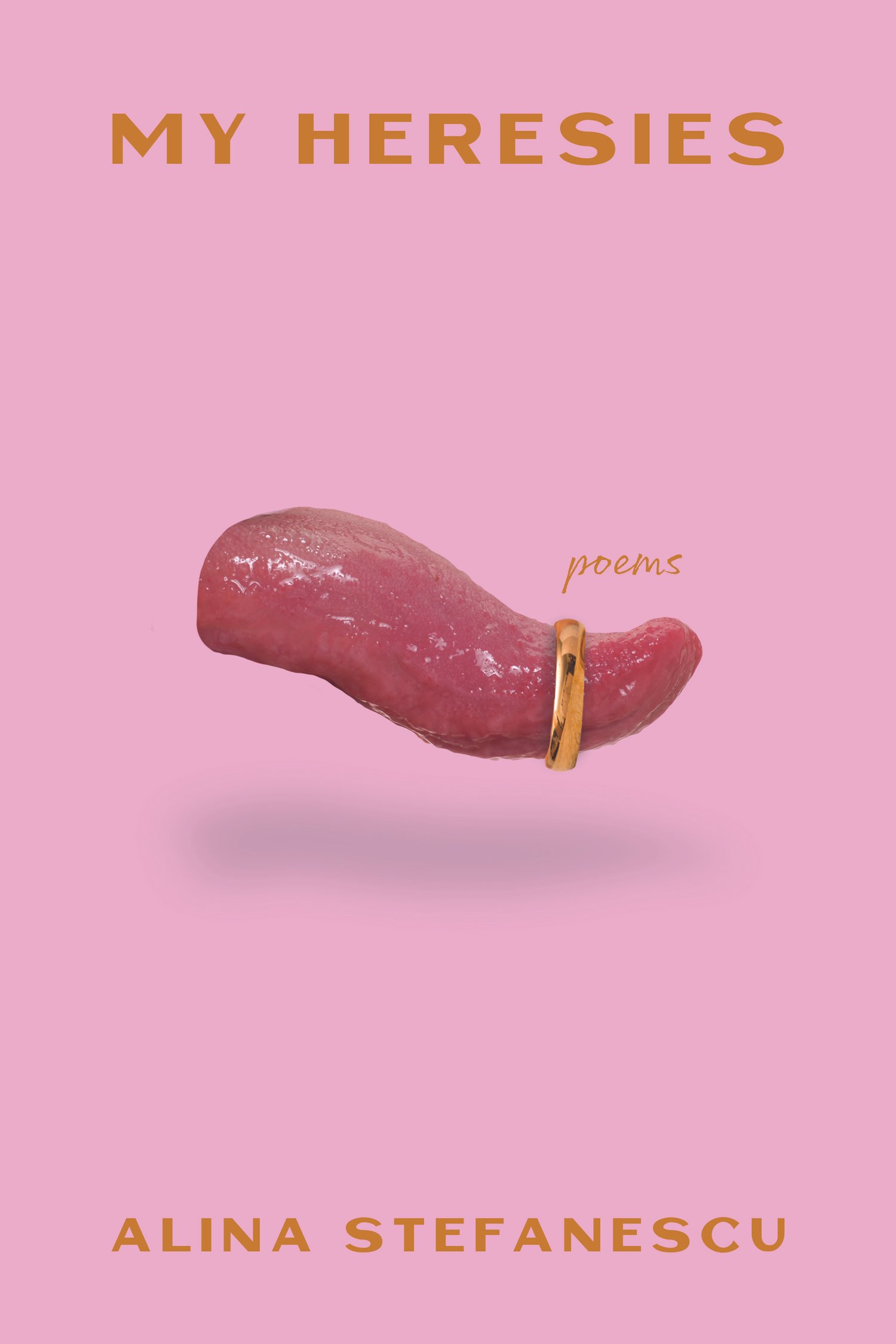
My Heresies – Alina Ştefănescu Alina’s previous book of poems, Dor, gave me an extremely inflated sense of how good the average poet on Book Twitter is. For many years, I bought chapbooks from good posters, thinking that I would be able to recapture the magic of reading Alina’s work for the first time. I’m just sad that it took 4 years to get another book from her.
Sad Tiger by Neige Sinno, translated by Natasha Lehrer Sad Tiger won all of the awards in France, and is now appearing in English for the first time in this edition from Seven Stories Press. A young woman explores dealing with traumatic memories by integrating the works of Nabokov, Woolf, Morrison, and more. It’s also blurbed by Annie Ernaux, and one thing this post should make clear to you is that I am susceptible to blurbs.
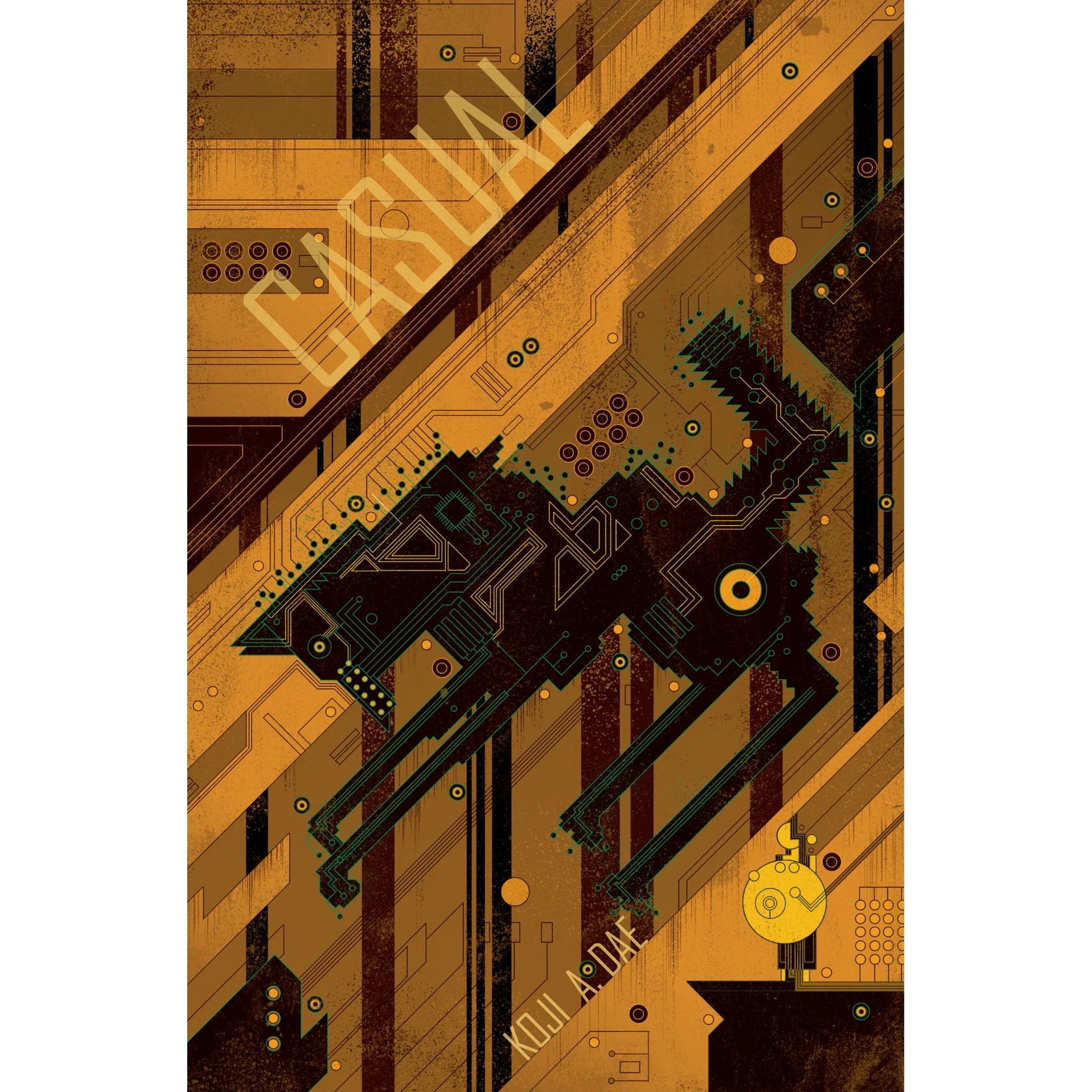
Casual by Koji A. Dae I know nothing about this press or this book beyond the blurb, but they both look rad. While pregnant, a woman needs to give up the app she’s addicted to. The publisher website says that it explores issues surrounding bodily autonomy. Addictive apps and the way they control our bodies are always on my mind, so I am excited to read this novel.
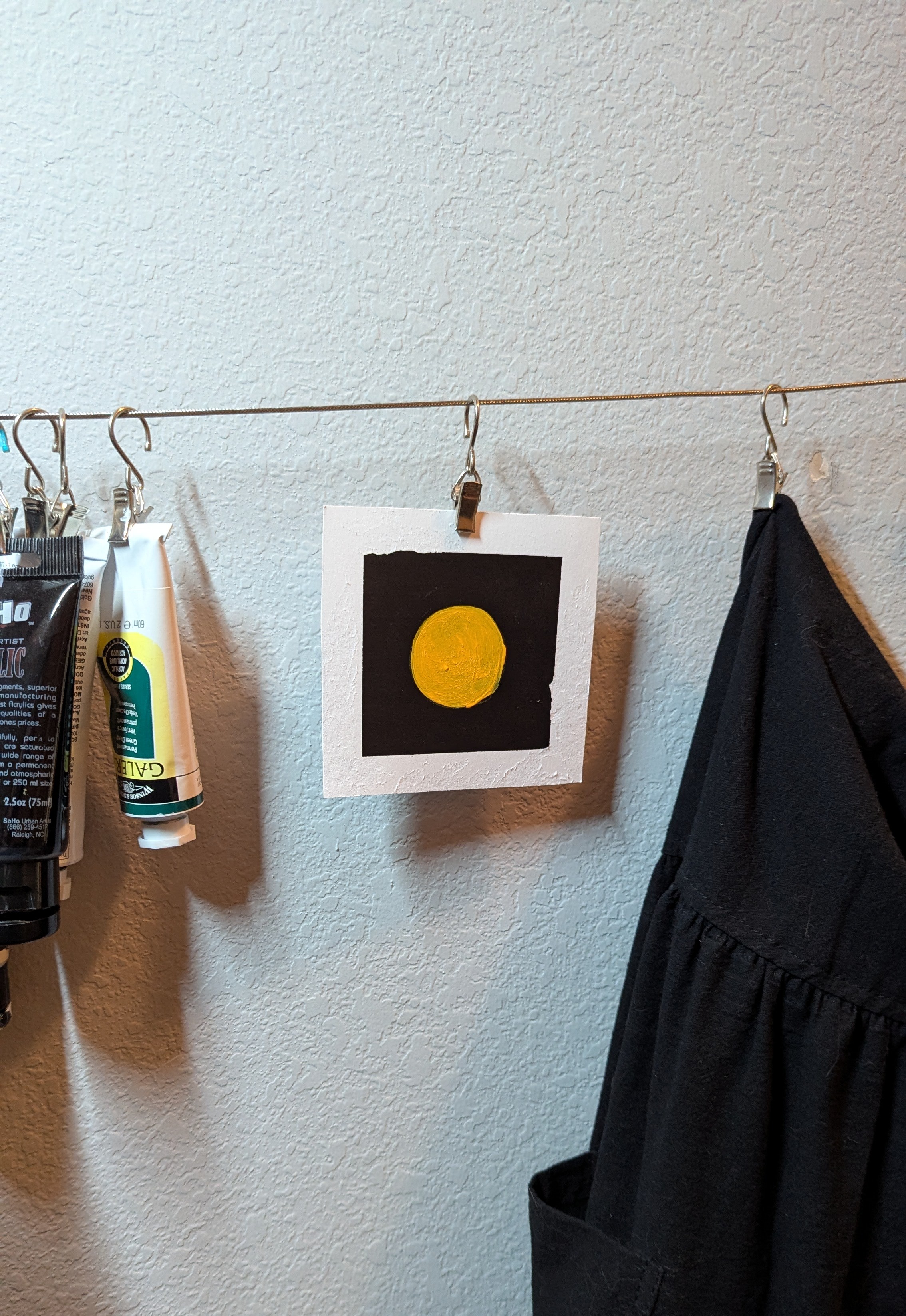
I complained over lunch that my new year’s resolution was to paint at least one painting per month and it was January 31st and I didn’t have a painting. My friend asked, “what if you painted a single dot? You have time today for that.” I agreed to do that, but then instantly started expanding my scope. “I want to paint fruit, but then I have to arrange the still life.” “What if you painted a single fruit?” “Ok, I can paint a mandarin, because I have some at home. But mandarins are actually hard because the only color difference comes from value changes.” “Ok, what if you painted a flat mandarin with no values?” “So an orange circle?” “Yes, an orange circle.”
Here is my orange circle, which I will put near my desk as a reminder that I don’t need to be ambitious to make art.
The orange circle wasn’t simple. I still had to overcome the hurdle of getting started. If I were painting regularly, this wouldn’t be an issue, but since I haven’t been I have dried paint on my palette and cat fur on everything. There were still decisions to make, such as what size and color the background should be. I freehanded the circle, which took steadiness, and I had to mix an orange that was opaque enough to cover the black. I learned things about building texture and about obscuring texture. I learned not to use washi tape on that mixed media paper or it will rip. There is depth in every project.
A friend of mine said they were giving up their Washington Post subscription and wanted recommendations for more ethical media to subscribe to. The group text provided a list of suggestions, which I will paste down below if anyone is interested. After I chewed on it further, however, I felt dissatisfied by our answers. None of these smaller media sources are a one-for-one replacement for the experience of reading a website like The New York Times, The Atlantic, or The Washington Post. These major media outlets are more consuming; you can spend all day clicking between breaking news, opinions, book reviews and more. There is no single independent equivalent because no one else has the funds for an entire media empire, especially not if they are also funding real journalism that requires in-depth investigation and fact checking. To get the same experience, you need to have a paradigm shift. You need to move from the idea of a one-stop-shop to a network of sources.
The solution is RSS
This header is a bit tongue in cheek because I say that RSS is the solution to many things. I really mean it this time though! Using an RSS reader allows you to cobble together multiple sources and types of media to give yourself the experience of reading a daily newspaper.
If you are unfamiliar with RSS, it’s a method of aggregating the content of multiple websites into one feed. For that, you need a feed reader. I personally use Readwise, but other popular ones are Feedly and Newsblur. To add a feed to your reader, you can usually just cut and paste the URL into the reader and it will find what it needs to syndicate that page. Some readers also allow you to track twitter accounts, reddit threads, patreon posts, newsletters, and more. Instead of reading your newsletters in your email and bluesky posts in the app and reddit posts on reddit, you can combine all of the things you are tracking into one interface, usually with no ads. This can give you the experience that you get as a subscriber to a larger outlet like the New York Times. You can have your daily dose of puzzles and news and comics all through one app.
Recommended independent media
Here’s the list of independent media outlets that we recommended to our friend.
Other independent media Aftermath – gaming news, for if you miss Kotaku 404media – technology news Miedastouch Mother Jones Democracy Docket Molly White – Citation Needed – tech world news Defector – Mostly, but not all, sports. On top of being all around great, has crosswords! The Flytrap – for if you miss Jezebel Rewire 19th News – “gender, politics, and policy” The Philly Inquirer The 51st – for Washington D.C. Erin in the Morning – discussion of trans legislation Labor Notes – labor news The Texas Observer – $3 a month. This is where the best national reporting about immigration and the border is. Garbage Day – It’s a newsletter about the Internet which means sometimes it’s vitally important and sometimes it’s about streamer beefs and OnlyFans drama. Since Ryan is so familiar with subcultures like minecraft modders, though, he has been more spot on than other reporters about national news lately because unfortunately our country is run by freaks who spend too much time online. In These Times – $20 a year for the paper version. News by and for the working class.



 Libromancy