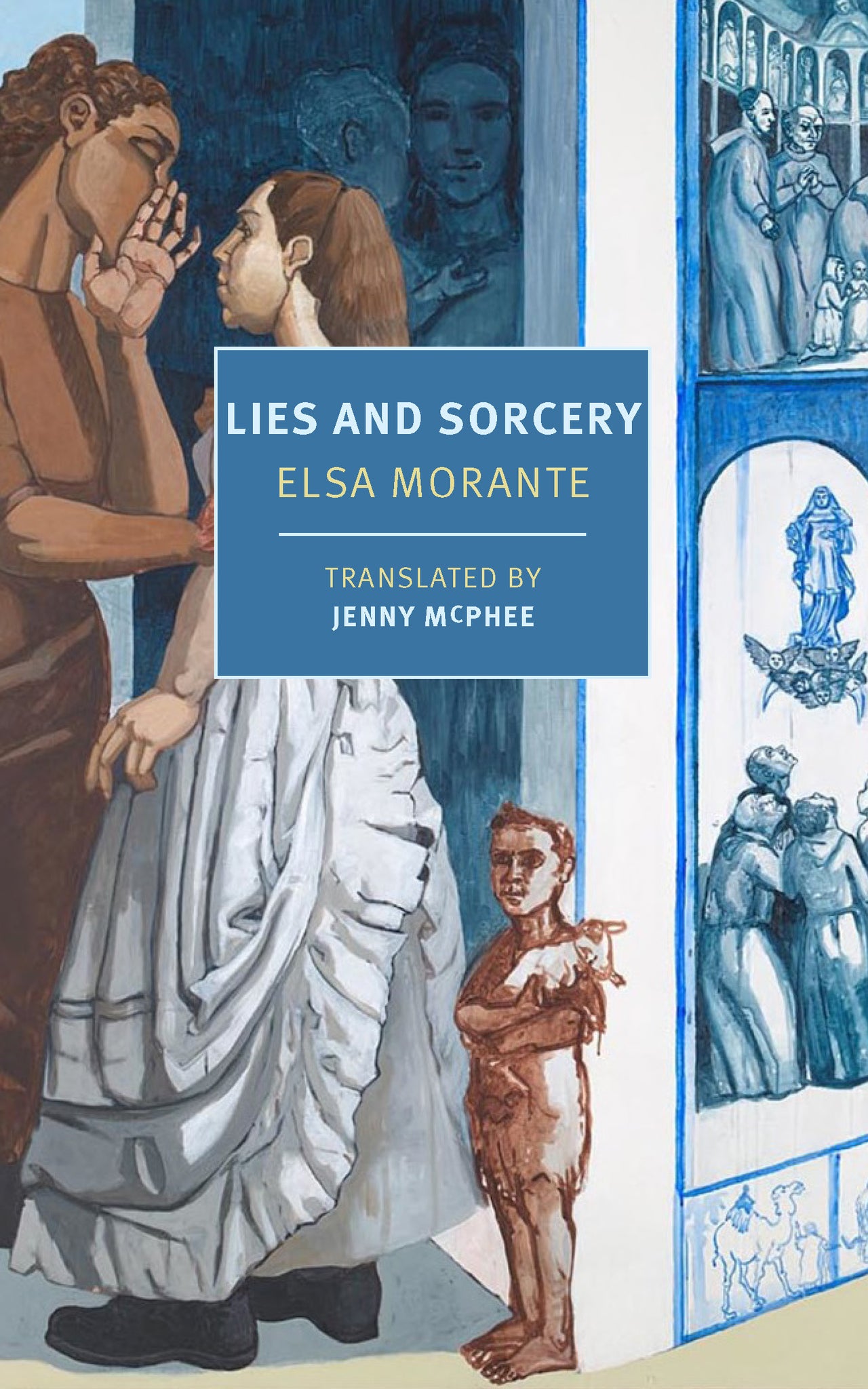
I have been reading Lies and Sorcery by Elsa Morante (translated by Jenny McPhee) as part of the #NYRBWomen25 readalong hosted by Kim McNeill. This is the second year that Kim has organized a reading group specifically for women writers published by NYRB Classics. Last year, I read a few of the same books at roughly the same time, but I wouldn’t say I participated. Now I am actively trying to join discussions on Bluesky. Some people are posting about it on Instagram as well, and Paul and Trevor from the Mookse and the Gripes podcast have been discussing the books briefly on air.
Lies and Sorcery is the longest book in the lineup this year at 800 pages. Kim provides recommended dates to read each chapter, which causes me to slow down and spread the book out of a longer period of time than I would if I were simply reading until I fell asleep each night. The pacing combined with online “watercooler talk” makes it feel more like watching a prestige tv show than reading a book. I have to wait until the next week to see how these characters who hate each other will (as revealed at the start) marry, or to find out what happens to the cheerful but destitute prostitute. The novel is melodramatic so it lends itself especially well to this type of serialization. The last time that I had this experience was when I participated in a different NYRB classics reading group and read The Balkan Trilogy by Olivia Manning. That book was less sensationalist, but it was long and epic in scope, and I watched it unfold slowly alongside other book twitterists.
The most obvious comparison for Lies and Sorcery is the Neapolitan trilogy; even the authors Elsa Morante and Elena Ferrante rhyme. (Of course, given that Ferrante is an alias, the name Elena Ferrante may have been chosen to recall the former queen of Italian literature.) Both works are about the constraints of poverty, particularly as they affect women, both focus in on the relationships within an Italian neighborhood, and both are extremely melodramatic. Whereas I count My Brilliant Friend as one of my favorite novels, I initially found Lies and Sorcery a slog. Every character is miserable and hateful. Ferrante does a better job of placing this misery within an intellectual context, drawing on Marx and Cixous. Lies and Sorcery, on the other hand, is cynical. No one has true political convictions; communism and elitism are both merely clothes that characters put on as needed to try to advance their selfish goals. No character has as much self respect as Elena or Lila; Nino Sarratore is not remotely as despicable as Lies’s Eduardo. After a few hundred pages, I at least came to respect Morante’s work, and I had invested myself enough to care what happened next. In the very first chapters, the narrator, Elisa, describes all of the major plot outcomes of the novel, and so I am not reading to find out what happens but to see how emotionally these characters can degrade themselves to that point. I am glad that I am reading it as part of this group because the discussion pulled me over my initial resistance and is helping me appreciate the melodrama rather than resist it.

 Libromancy